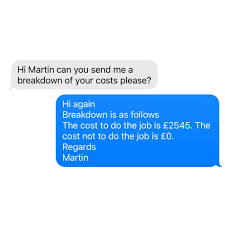
You might have heard the story of the plumber who was called to fix a noisy pipe in a factory.
He (because it probably was a ‘he’) hit the pipe with a hammer and sent his invoice for £1,000. The manager asked him to justify his cost by breaking down his invoice.
The new invoice said: ‘Hitting the pipe with a hammer, £1. Knowing where to hit it, £999’.
There are various iterations of that story, and I doubt any of them are true.
It’s always best to tell true stories. So here’s a true one…
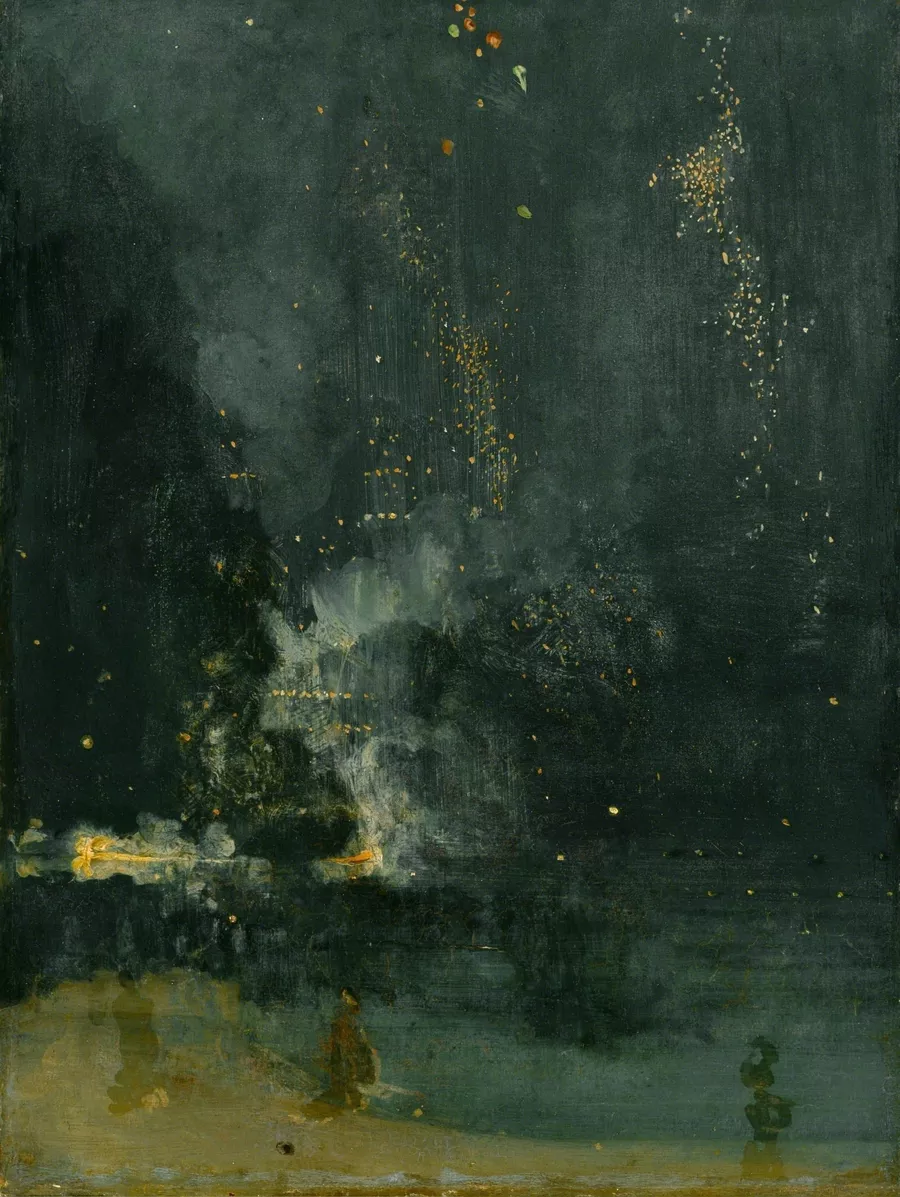 In 1875, London-based American artist, James Abbott McNeill Whistler, produced the painting (right), ‘Nocturne in black and gold, the falling rocket’.
The artwork depicts fireworks exploding over the River Thames with gold speckles representing the glitter of the falling sparks and pedestrians in the foreground rendered in loose brushstrokes. It was part of an atmospheric series where he applied Asian design principles to moonlit views of the river.
The painting cost 200 guineas.
England’s leading art critic John Ruskin wrote: “I have seen, and heard, much of Cockney impudence before now; but never expected to hear a coxcomb ask 200 guineas for flinging a pot of paint in the public’s face.”
In 1878, Whistler sued Ruskin for libel.
In the Old Bailey, Whistler defended himself, while Ruskin (who was ill) was represented by attorney general, Sir John Holker.
Pre-Raphaelite painter, Edward Byrne-Jones testified that Whistler’s Nocturne was: “A beautiful sketch; but that is not alone sufficient to make it a good work of art. It is deficient in form, and form is as essential as colour.”
Holker asked Whistler how long it took for him to “knock off” one of his paintings. When Whistler responded that it took just two days, Holker asked if two days’ labour was worth 200 guineas.
“No,” Whistler responded (with echoes of the plumber story), “I ask it for the knowledge I have gained in the work of a lifetime.”
Whistler won the case.
But it wasn’t a happy ending, for either of them.
Whistler claimed damages of £1,000 in addition to his court costs, but was only awarded a farthing and was left bankrupt.
Ruskin, who’d once had an infallible reputation as an art critic, was thereafter seen as an outmoded anti-modernist.
It’s even better to tell your own original stories. So here’s one of mine…
I was working for a client in Reigate which is a 45-minute drive from my home office.
The client turned out to be one of those people who insisted on meeting face to face, every time. He just didn’t like to communicate via phone or email or video call.
But if I drove down there for a meeting, he’d keep me waiting for at least 20 minutes, then chat for no more than 10. So each 10-minute conversation cost me a couple of hours when I could have been doing something else.
For his next job, I included the ‘lost opportunity cost’ in my quote.
He insisted I break down the quote and I made the mistake of doing so. I always include the initial briefing meeting free, but I itemised extra meetings as a separate line item.
He didn’t want to pay for those, so I turned down his future work.
What this means to you
Content writers – and to some extent, copywriters – are threatened by AI in that some clients think they can now generate their own content (and copy) instantly, free or at very low charge.
The content (and copy) they get may be quick and cheap. But it isn’t quality.
If you want quality, you have to invest time and money.
Proper copywriting is an investment. Because it helps clients generate more in sales than it costs in the first place.
Proper copywriters are like the plumber who knows exactly where to hit the pipe, and the artist who holds the knowledge of a lifetime.
